Katy has been hard at work making soft wax, and she now has 53 more tins to ship out immediately. Tins are $12 each and are available here through her etsy.com store.
This is likely the last batch she will be able to manage before the end of the year, though she is a determined young lady. She’s pushing hard to sell wax so that she can go on a school-sponsored trip to Boston in 2018. We’ve agreed to pick up half the cost, but she is responsible for the rest of the trip’s expenses.
And (God help me) she will almost certainly become a fully licensed driver this Friday and need to purchase gasoline and “Little Tree” air fresheners for her vehicle.
Years ago I visited a well-known tool collector and was completely charmed by a series of 1910 postcards that adorned his stairwell. Each postcard featured a modestly dressed woman posing with a tool. The surface of each postcard featured some low-level pun: “Its perfectly plane that I love you.” (Yes, they made a grammatical error there.)
At the bottom of each postcard was written: Copyright 1910 by F. Bluh.
The tool collector had amassed the postcards during many years of searching (before eBay existed). I thought these postcards would make a nice shop decoration and made a note to search some out.
Then life got in the way. John and I had started Lost Art Press, then I quit my job and forgot about the postcards. Earlier this year, Suzanne Ellison stumbled on one of them, she sent it to me and it reignited my desire to collect them.
I now have 12 of them (there are more, but 12 is enough for me). I’m going to frame them this week and decided that you might like to have them for your shop as well. So I scanned each at 300 dpi, did some mild repair and sharpening, and have bundled them in the following .zip file that you can download.
These images are entirely in the public domain. Feel free to print them on photo paper and hang them in your shop or stairwell.
Of the postcards, I have two favorites. The oil can postcard and the handscrew postcard. The oil can postcard says: “If sympathy can’t soothe you, perhaps oil can. What.” What does “what” mean? “What” the heck? The handscrew postcard is just creepy. The woman has a half-lidded “Ringu” expression on her face and the text reads: “I like to be squeezed.”
Just as the Lost Art Press Horse Garage has been nearing completion, this happened.
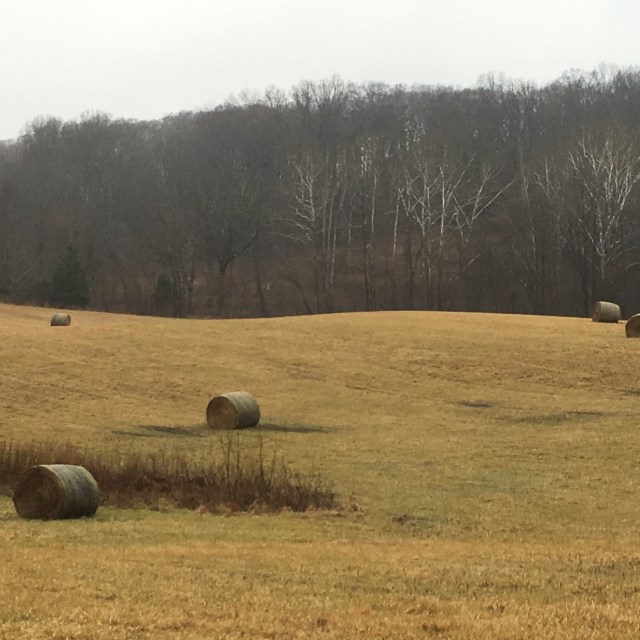
Hay field on a gray late-autumn day
Whenever my sister or I said “Hey” as children, at least within earshot of our local grandma (the other grandma lived far away, in New York), we were gently nudged in a more genteel direction. “Hay is for horses,” she’d say.
But European art suggests that hay and gentility have not always been at odds.
Twice this week I heard from Suzanne Ellison (a.k.a. Lost Art Press’s saucyindexer). Unbeknownst to me, The Saucy One had turned some images of the hayrake table I made for my book on English Arts & Crafts furniture (forthcoming in June 2018 from Popular Woodworking) into a framework for a collage of women using traditional hay rakes.
“I thought if a woman builds a Hayrake Table than she should probably have a collage combining her table and women using a hay rake (apparently, men scythed and women raked and fluffed),” wrote Suzanne.
Judging by their attire, most of these women are peasants (as were my grandma’s forebears), but a couple look far more refined. Please tell me that Rosina (center row, right) was not really going to rake and fluff hay in high heels and a ribboned bonnet. And what about that corseted lady in the middle of the top row?
I’m grateful to Suzanne for applying her erudition in the cause of fun. And I chuckled when I read how she addressed me in the last message: “Hey Nancy.”–Nancy R. Hiller, author of Making Things Work
***
Suzanne has provided the following Information about the images:
Top row (from the left): Jean-Francois Millet, a watercolor from a mid-Victorian** friendship book, Winslow Homer.
Middle left: Peter Breugel. Middle right: Rosina is dated 12 May 1794 by Laurie & Whittle, London (no other info), but much earlier than the mid-Vic watercolor in the top row.
Bottom row: Camille Pissarro, Maud Mullen by John Gast, after J.G. Brown, ‘Sweet Memories’ a postcard from around 1905, Leon-Augustin Lhermitte.
Center portion: butterfly from your table, a Shaker hay rake from Hancock Shaker Village in Massachusetts, hayrake from an original table (your photo), hayrake from your table.
The frame, as you know, is constructed from your table.
**Here is a link to the mid-Victorian watercolor in the top row, it is for sale (£28.00):
Thanks entirely to Megan Fitzpatrick and Brendan Gaffney, the machine room for my workshop is on schedule to be complete by the end of the year.
It feels incredibly good to be typing those words.
When we bought the storefront 26 months ago, I almost lost heart at the closing. Lucy and I had fought like hell to buy the property – it took six months of wrangling with real estate agents and lawyers to simply pay the asking price for the property and be done with it.
Anyway, on the day of the closing, Lucy and I went to Left Bank Coffeehouse before signing the papers, and I went completely numb. Suddenly it seemed like buying a half-derelict lesbian bar in downtown Covington wasn’t such a good idea. Perhaps the building was even worse than the inspection had revealed (it was). Perhaps we would have to spend tens of thousands of dollars more to get it livable (we did).
Despite my sudden malaise, Lucy pushed me forward through the closing. At the end, I received a Captain Morgan’s Rum necklace filled with keys to the bar. Lucy went off to work, and I went to the bar.
I unlocked the front door and walked around, convinced I had made a huge mistake. There was so much work to do, I didn’t even know where to start. So I left the bar, locked the front door and went home for two weeks, refusing to even drive by the place or think about it.
When I finally came to my senses, I decided to measure the bar’s rooms so I could create a floorplan. I walked up to the front door of the bar to unlock it.
The door was unlocked and swung open.
Suspicious, I tiptoed into the bar and looked around. No one was in the bar. Nothing had been stolen or disturbed.
Curious, I began fiddling with the lock to the front door and realized that I had left it sitting unlocked and wide open for two whole weeks.
At that moment, for some reason, I fell in love with the neighborhood and the building. Since then I have been helped by old friends and new to demolish the beer-soaked interior and create a beautiful and traditional working space.
It’s been a hell of a lot harder than I thought it would be. But today, as we hung the first two doors to the machine room, I felt like maybe buying the lesbian bar wasn’t such a bad idea. With good friends and the neighborly people of Covington, it was starting to feel like home.
When my wife asks me what I want for Christmas, I say the same thing every year: Please do not get me anything. Nothing. I do not want a single dang thing.
I know, however, that there are times where you can’t stop your loved ones from getting you something during the holidays. And that is what this “gift guide” is for. It is a list of small things – usually very inexpensive – that will make your shop time a little nicer.
Here is a list of manufacturers who sponsor this gift guide:
1.
2.
3.
Yup. Most “gift guides” are affiliate programs in disguise. Or they are sponsored content that seeks to offload goods that haven’t sold well enough this year.
All the items in this gift guide are things I’ve bought. With my own money.
One more thing: Since we started Crucible Tool, I have stopped writing tool reviews. I know this gift guide blurs the line a bit. I’m sure I could type some rationalization for this, but instead I’ll just ask the naysayers to take up a new hobby instead.